
How to Get a Customs Bond


A customs bond can cover eligible import entries for 12 months, making it a practical option for businesses that import more than once.
To apply, importers need to provide accurate business and import information, estimate their annual duties, taxes, and fees, and complete the application before the bond can be activated.
This page is specifically for importers applying for a Continuous Customs Bond.
Businesses that import regularly may need a customs bond before U.S. Customs and Border Protection can release their goods.
A Continuous Customs Bond supports eligible entries throughout a 12-month term. This can make it easier for importers to manage ongoing shipments without obtaining a separate bond for each entry.
The process is generally smoother when importers gather the required information early and apply before their next shipment reaches the port.
How Do You Get a Customs Bond?
Most importers follow the same general process:
- Confirm that a customs bond is required.
- Gather the required business and importer information.
- Estimate annual duties, taxes, and fees.
- Submit the customs bond application.
- Respond to any additional questions or documentation requests.
- Confirm that the bond is active before the customs entry is filed.
The exact timeline depends on the accuracy of the application, the requested bond amount, and whether additional review is required.
Who Helps You Get a Customs Bond?
A customs bond generally involves three parties:
- The importer, or principal, who is responsible for meeting the bond conditions
- U.S. Customs and Border Protection, which requires the bond
- The surety company, which financially backs the importer’s obligations
Importers often obtain a customs bond through a licensed customs broker or bond provider that works with an authorized surety.
Customs Bonds USA is powered by AFC International, a licensed customs brokerage. AFC International helps importers prepare the required information and move through the customs bond application process. The authorized surety provides the financial backing for the bond. The importer remains responsible for providing accurate information and meeting applicable customs requirements.
What Information Do You Need to Apply?
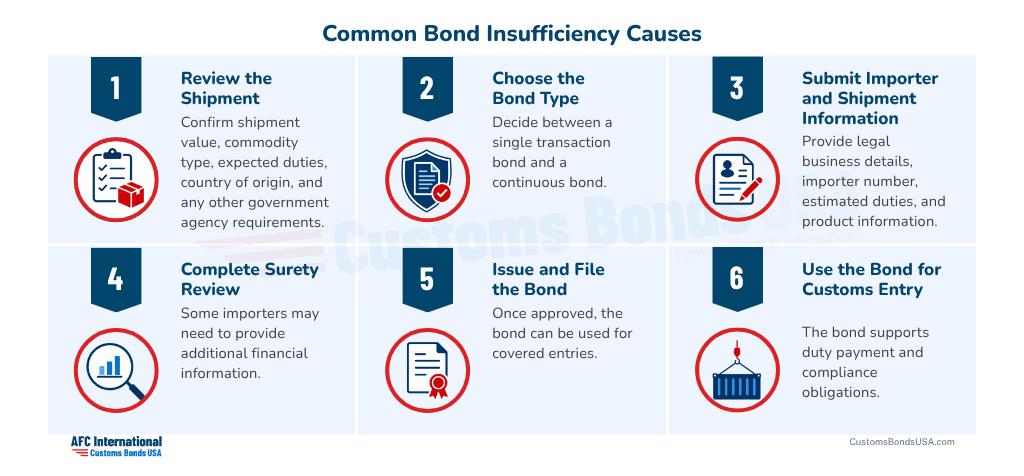
To get a customs bond, an importer usually confirms whether a bond is required, chooses the right bond type, submits business and shipment details, completes any surety review, and uses the approved bond for customs entry.
Most importers should be prepared to provide:
- Legal business name
- Physical business address
- Contact information
- Employer Identification Number or importer number
- Business structure
- Estimated annual import value
- Estimated annual duties, taxes, and fees
- Product descriptions
- Country of origin
- Shipment details
- Customs broker information, if applicable
Your legal business name should match tax and import records. Small differences in names, addresses, or identification numbers can create filing issues.
How Is the Bond Amount Determined?
The bond amount is generally based on the importer’s expected annual duties, taxes, and fees.
A standard Continuous Customs Bond commonly begins at $50,000, but a higher amount may be required when the importer has greater duty exposure or additional regulatory obligations.
Factors that may affect the bond amount include:
- Annual import volume
- Estimated duties, taxes, and fees
- Types of imported goods
- Partner Government Agency requirements
- Antidumping or countervailing duties
- Tariff changes
- Import history
- Existing bond sufficiency concerns
Importers should provide realistic estimates.
If annual duty exposure is underestimated, the bond may become insufficient as import activity grows. An insufficient bond can create delays or interrupt future customs entries.
How Long Does It Take to Get a Customs Bond?
The timeline depends on the completeness of the application and whether additional review is needed.
The process may take longer when:
- The importer is new
- Business information does not match existing records
- The requested bond amount is high
- The imported goods present additional compliance risk
- Import history is limited or complex
- Partner Government Agency requirements apply
- Supporting information is missing
Importers should apply before the bond is needed for a customs entry. Waiting until cargo has already arrived can create unnecessary clearance pressure, storage costs, and delays.
What Happens After You Apply?
After the application is submitted, the broker, bond provider, or surety may:
- Review the importer information
- Confirm the requested bond amount
- Evaluate annual duty exposure
- Verify importer records
- Request additional documentation
- Approve and activate the bond
Once the bond is active, the importer or customs broker can use it for eligible entries during the bond term.
Bond approval does not remove the importer’s compliance responsibilities.
The Importer of Record must still:
- Provide accurate commercial invoices
- Classify goods correctly
- Report the correct country of origin
- Declare the correct customs value
- Pay required duties, taxes, and fees
- Follow CBP and Partner Government Agency requirements
- Maintain required import records
What Happens After the Bond Is Active?
Importers should continue monitoring the customs bond throughout the year.
This includes:
- Confirming that importer information remains accurate
- Sharing the bond information with the customs broker
- Tracking annual duties, taxes, and fees
- Monitoring changes in import volume
- Reviewing tariff and duty changes
- Checking bond sufficiency
- Preparing for renewal or replacement
A bond that was sufficient when it was issued may become too low if the business begins importing more frequently, increases shipment values, or becomes subject to higher duties.
Monitoring bond sufficiency can help importers avoid disruptions to ongoing import activity.
Is This Customs Bond Right for You?
A Continuous Customs Bond may be a good fit when:
- You import more than once
- You expect multiple customs entries during the year
- You want one active bond supporting eligible entries
- You need year-round coverage for ongoing import activity
- You want to avoid obtaining a separate bond for each shipment
Importers who are unsure whether this option fits their activity should review the customs bond requirements or speak with a customs bond specialist before applying.
Ready to Apply for a Customs Bond?
Before you apply:
- Confirm that a Continuous Customs Bond fits your import activity.
- Gather your business and importer information.
- Estimate your annual duties, taxes, and fees.
- Review any Partner Government Agency requirements.
- Submit the application before your next entry needs to be filed.
Need more information? Call (480) 725-3433 for help preparing your information and beginning the application process.
Sources:
Bond, CBP, 2024
CBP Form 5106 – Create/Update Importer Identity Form, CBP, 2025
Bonds – How Are Continuous and Single Entry Bond Amounts Determined, CBP 2026