


How to Get a Single Transaction Bond

By Joe Weaver
Last Modified:
May 20, 2026

Was this article helpful?
Explore even more resources at customsbondsusa.com
A single transaction bond is a customs bond for one imported shipment. To get one, the importer usually works with a customs broker or surety, provides shipment and importer details, completes CBP Form 301, and pays a bond premium based on the shipment’s value, duties, taxes, and fees.
How Do You Apply for a Single Transaction Bond?
To get a single transaction bond, the broker first confirms the client’s Importer of Record (IOR) status. An IOR is the person or entity responsible for ensuring that imports comply with all regulations and paying all duties, tariffs, and taxes.
The importer then provides shipment details and any supporting documents the broker requires and fills out CBP Form 301. Once accurately filled out, the customs broker submits the form to CBP.
The importer may need to submit additional documents such as a signed power of attorney to the broker or surety from whom they’re purchasing the customs bond. A surety is an insurance or bonding company that issues customs bonds to importers.
Let’s look at the documentation requirements from CBP’s side and the customs broker’s side separately. You’ll also see what documents you should have prepared before applying for a single transaction bond.
What CBP Form Do I Need to Fill Out for a Single Transaction Bond?
In accordance with 19 CFR Part 113, importers need to fill out the required information on Form 301 when applying for an STB. After checking the single transaction bond option, the importer then fills in:
- The ID number of the transaction, such as the entry number
- Date of the transaction
- U.S. Port Code
When applying for an STB, the importer will then check box 1 under the Activity Code column.
Other information that needs to be filled out on the customs bond application includes:
- Name and address of the bond principal and co-principal (if applicable)
- Name and address of surety issuing the bond
As mentioned earlier, most small to medium-sized businesses that need a customs bond will need to purchase one through a customs broker.
What Documents Will My Customs Broker Require?
A customs broker will need a signed power of attorney (POA) from the importer during the customs bond application process. The POA is required for a customs broker to perform any customs business on behalf of their clients.
Importers should also have a copy of their IOR registration available to submit to the customs broker when applying for an STB.
How Much Does a Single Transaction Bond Cost?
CBP generally requires a single transaction bond amount of at least the entered value plus duties, taxes, and fees, subject to a $100 minimum. The price you pay to obtain the bond can vary by broker or surety, so importers should request a quote based on the required coverage amount.
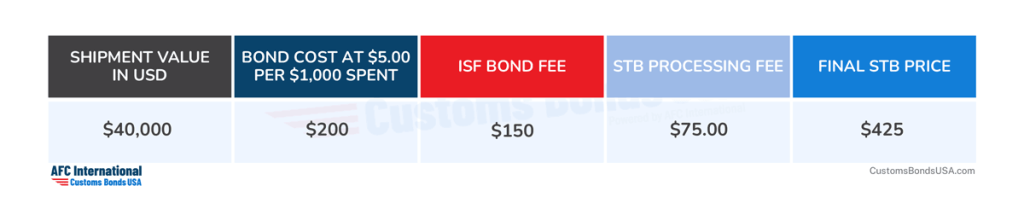
For instance, let’s say a customs brokerage charges $5.00 per $1,000 for an STB. An importer calls the brokerage to secure a customs bond for a shipment of stainless steel scouring pads (HTS code 7323.93.00). The shipment is valued at $40,000 and carries a 2% general rate of duty in the HTS. A separate ISF bond charge is assessed, along with a $75.00 processing fee.
These numbers give us the following values:
- STB Fee: $200 ($5.00 per $1,000 of value)
- ISF Bond Fee: $150
- Customs Bond Processing Fee: $75.00
The cost of a single transaction customs bond under these circumstances would be $425.00.
CBP also mandates that the amount of any customs bond be no less than $100 under most circumstances.
How Long Does It Take to Get a Single Transaction Bond?
A single transaction bond can often be arranged quickly once the importer provides complete shipment details and required documents. In straightforward cases, a customs broker or surety may be able to issue the bond the same day or within one business day. Delays are more likely when information is missing, the shipment involves higher risk, or the bond amount needs extra review.
What Can Delay Approval?
Approval of a single transaction bond can be delayed when the importer submits incomplete or inconsistent information.
Common issues include:
- Missing shipment details
- An unsigned power of attorney
- Incorrect importer information
- Unclear HTS classification
- Questions about the shipment’s value, duties, or fees
Delays can also happen if the broker or surety needs more documentation before issuing the bond.
Do You Need a Single Transaction Bond or a Continuous Customs Bond?
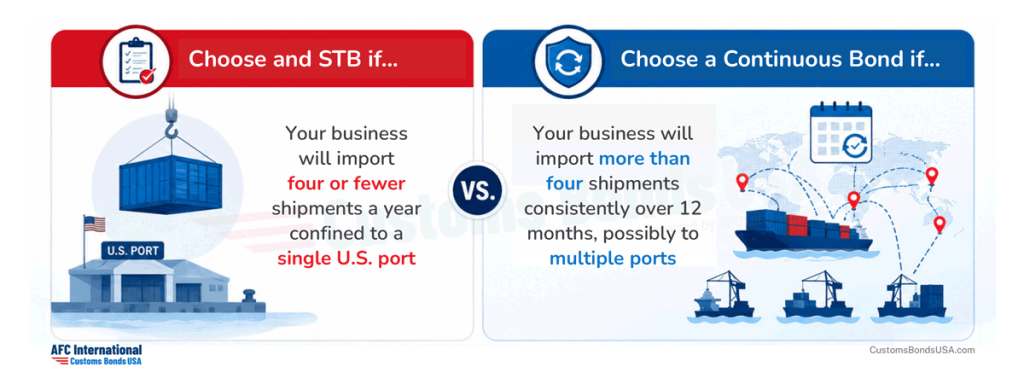
Businesses that only bring sporadic, infrequent imported shipments into the U.S. can use STBs efficiently, but a business that imports regularly more than four times a year will benefit from having a continuous customs bond on file instead. A continuous customs bond can be used over and over for 12 months at any port in the U.S., and it renews after those 12 months have expired.
When in doubt, use the following decision-making criteria to decide between a single or continuous customs bond.
Customs bond pricing and required coverage fluctuates as tariffs, international shipping complications, and other factors drive up the costs of imported commodities and their associated duties. This uncertainty adds to the already hard-to-predict world of importing and customs clearance.
Before you apply, gather your importer details, shipment value, HTS classification, duty estimate, and port code. If you import only occasionally, an STB may be the right fit. If you import regularly, compare the annual cost of a continuous bond before purchasing. Need help choosing the right option? Call us at (480) 725-3433 or fill out a contact form online.
Sources
Bonds, U.S. Customs and Border Protection, 2024
PART 113—CBP BONDS, Code of Federal Regulations, 2026
Validating the Power of Attorney and Electronic Signatures, U.S. Customs and Border Protection
Bonds – How are Continuous and Single Entry bond amounts determined?, 2026